
(Service Design · Patient Navigation)
A Patient Navigation Platform for Women Facing Bias in Cancer Care
Built with The Chrysalis Initiative. Recognized with a D&AD Pencil for Future Impact, 2022.
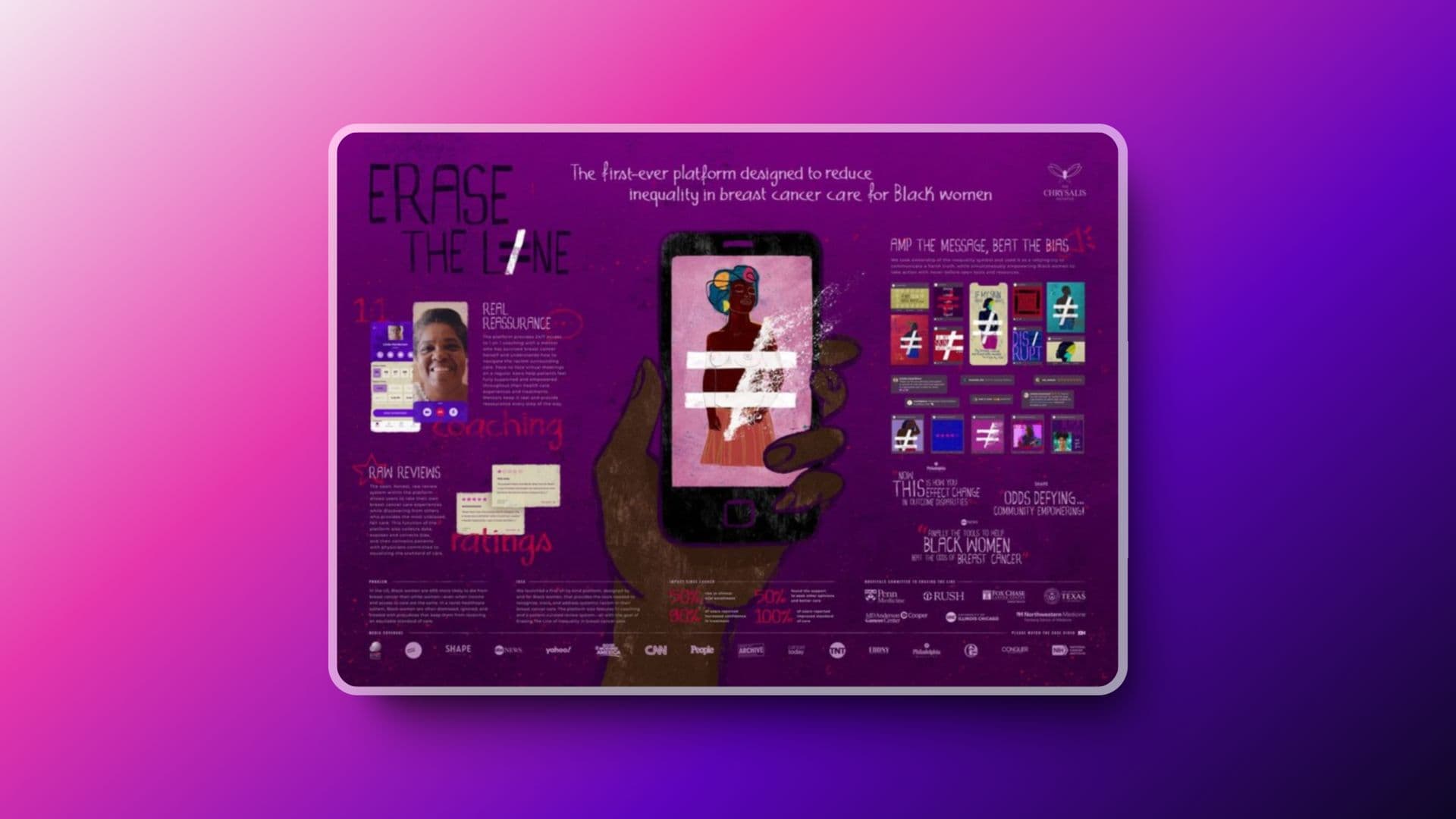
“This is one of the few times where the metrics actually could convert to lives saved.”
The challenge
Women of color in the United States face a documented healthcare gap. They receive inconsistent standard of care across regions and providers. They are profiled based on assumed insurance coverage. They are assumed, often incorrectly, to lack health literacy. These assumptions affect what tests are ordered, what conversations are had, what referrals are made, and ultimately what outcomes follow.
Late diagnoses follow bias. Worse outcomes follow late diagnoses. Many patients avoid the system altogether because they know what's waiting for them inside it.
The Chrysalis Initiative, founded by Jamila, built the Cancer Equality App as the product response to that gap. The Erase The Line campaign was the wrapper that brought the platform to a national audience. The app itself was the actual work: a navigation platform that connected patients with trained coaches and peer navigators, putting tools, documentation, advocacy language, and verified provider data directly in the hands of patients managing breast cancer care.
Before any of that existed, the coaching program ran on a spreadsheet and an email thread. A founder had built something real, matching breast cancer patients with trained coaches, many of whom had been through it themselves, but the operation lived in a document passed by hand. It worked at a small scale and made growth impossible. The constraint was never usability. It was operational: a human service that could not expand on the infrastructure holding it up.
“Before this, the support was email and Excel documents distributed by hand.
After, there was a live dashboard, real tracking, refinement based on coach usage data.
It's not many times in your life you get to work with such a brilliant team on such an important topic.”
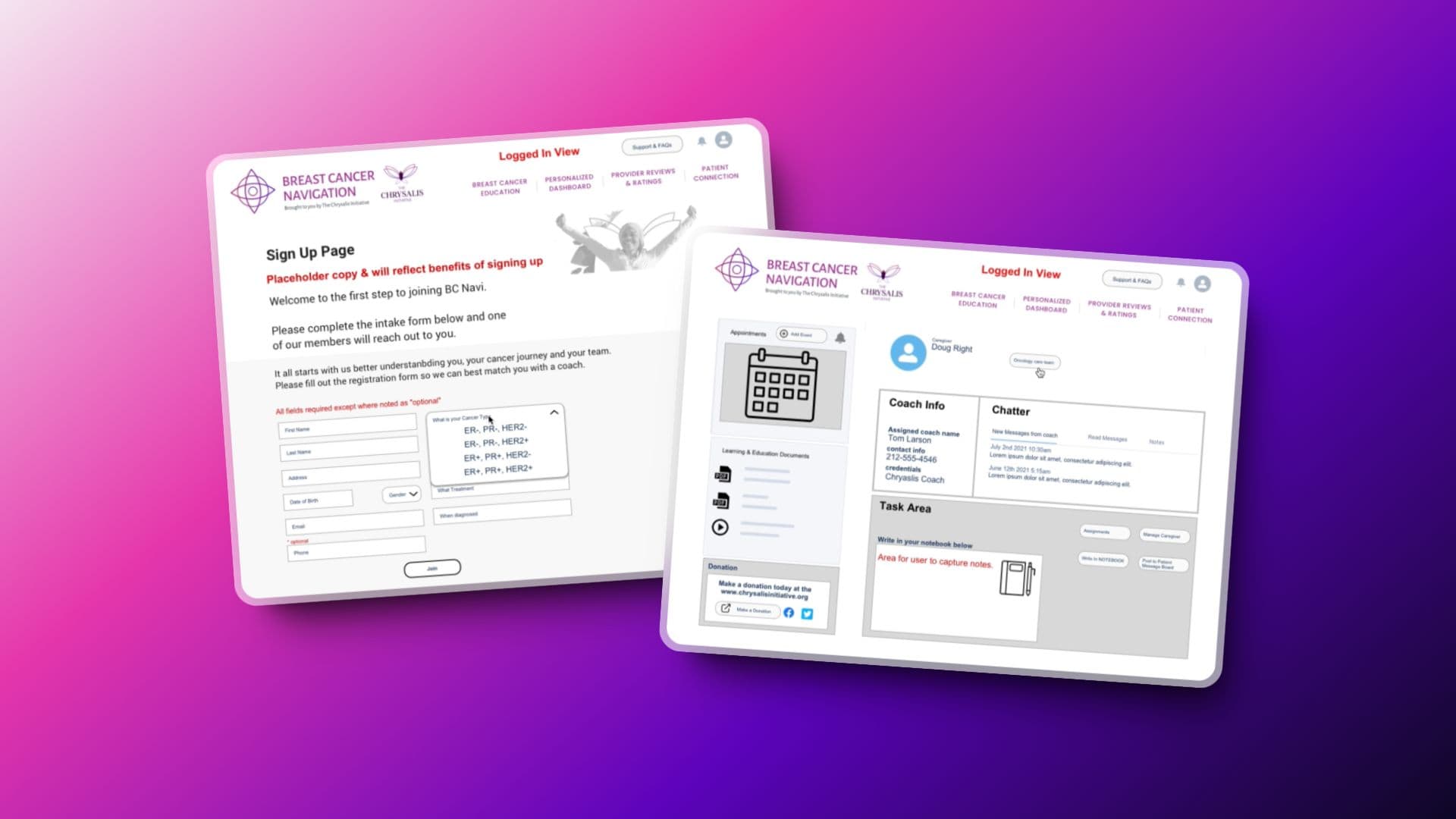
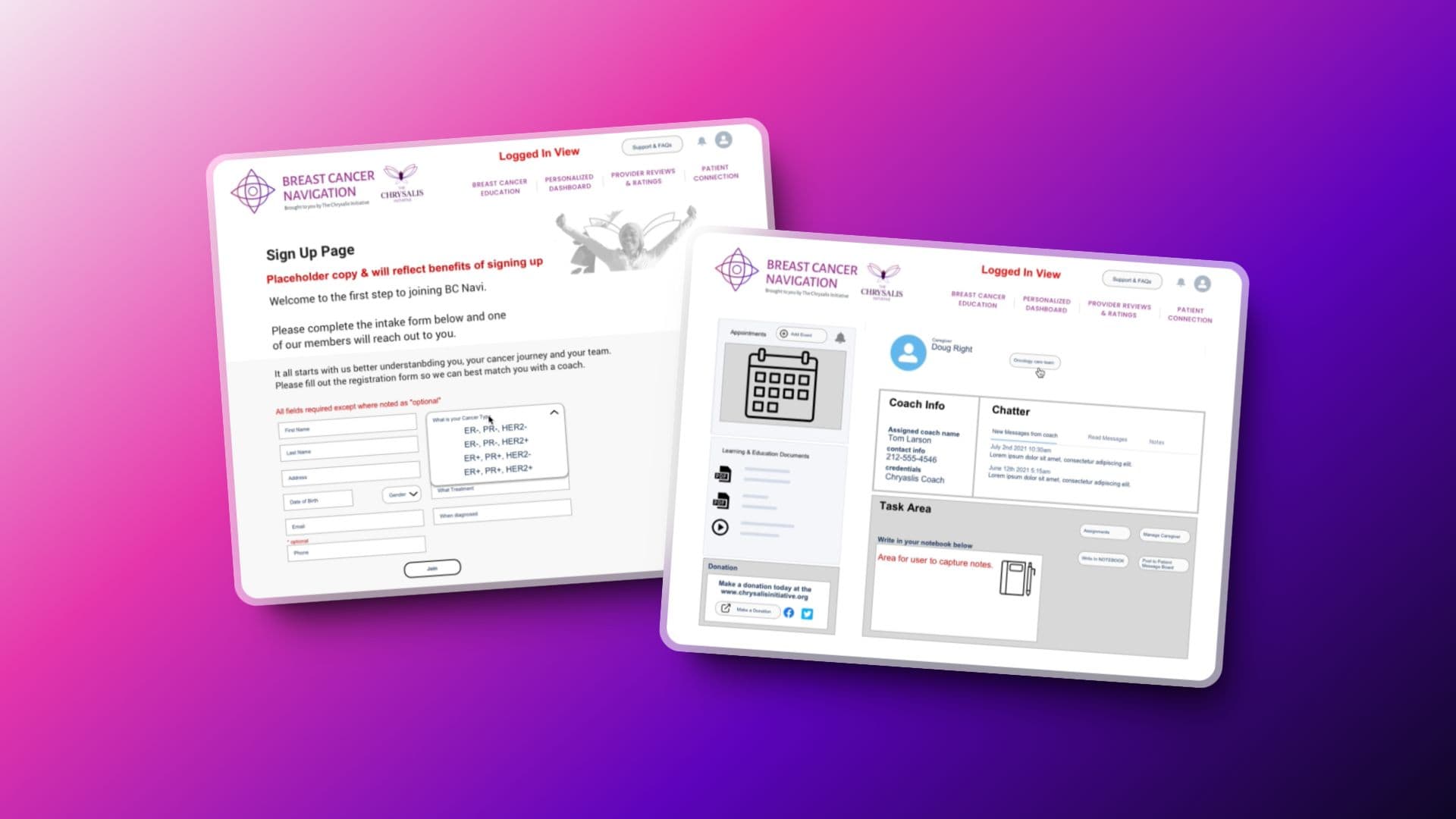
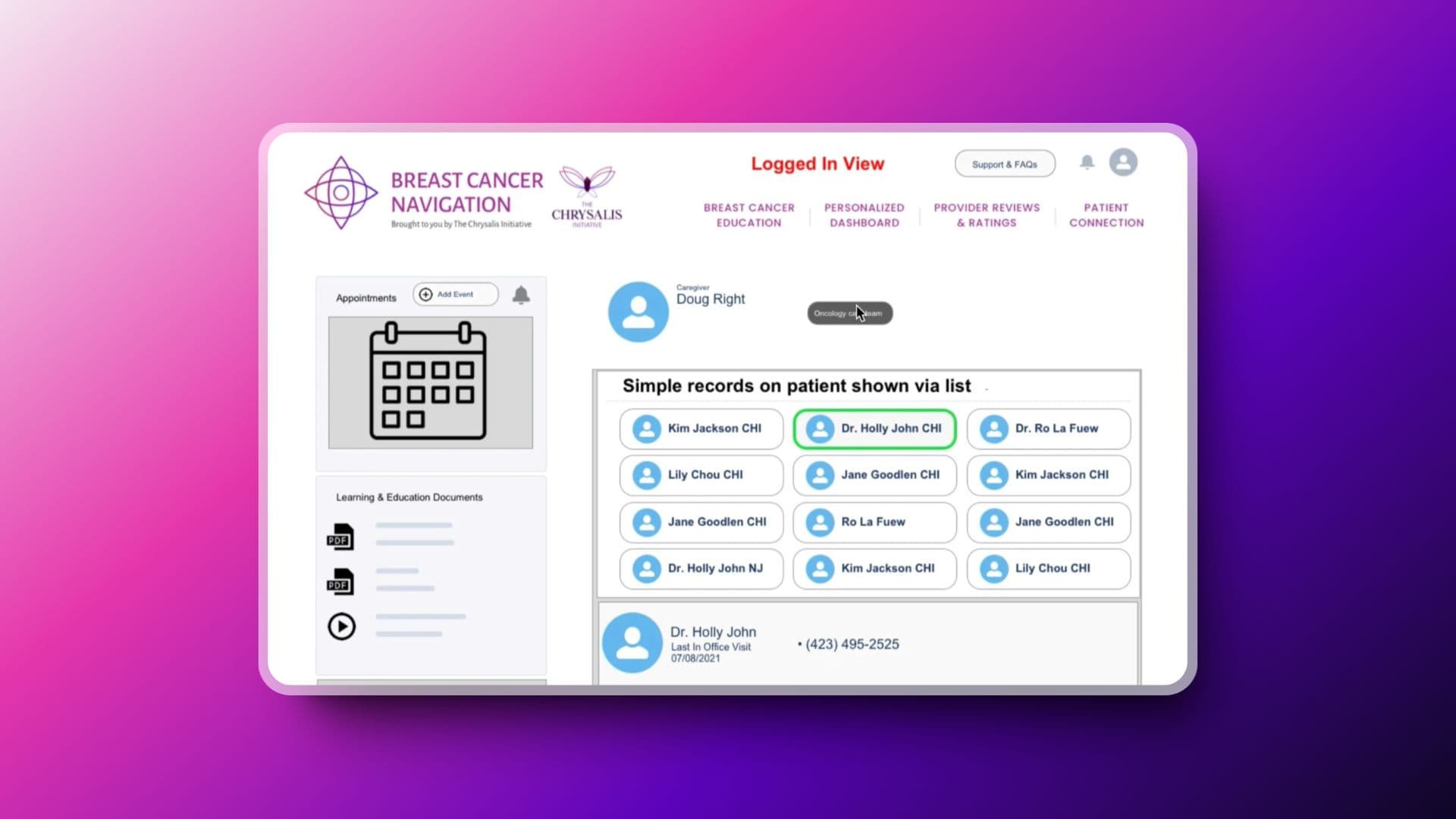
The work was to redesign a service, not just ship an app. Research started backstage, with the founder, on how coaches were recruited and how patients were matched to them. Then contextual inquiry with the coaches themselves, on how they cataloged patient conversations and reached their training materials. Only then did the two-sided product take shape. The coach-facing experience supported onboarding and the record coaches kept about the patients in their care. The patient-facing dashboard gave users visibility into their engagements, notes from sessions with their coach, and direct communication with the coaching team. Four communication flows, founder to coach, coach to coach, coach to patient, and patient to coach, became one role-segmented system.
I led product design across both sides of the platform, working directly with the initiative owner, account team, creative team, SharePoint developers, and a Salesforce CMS specialist.
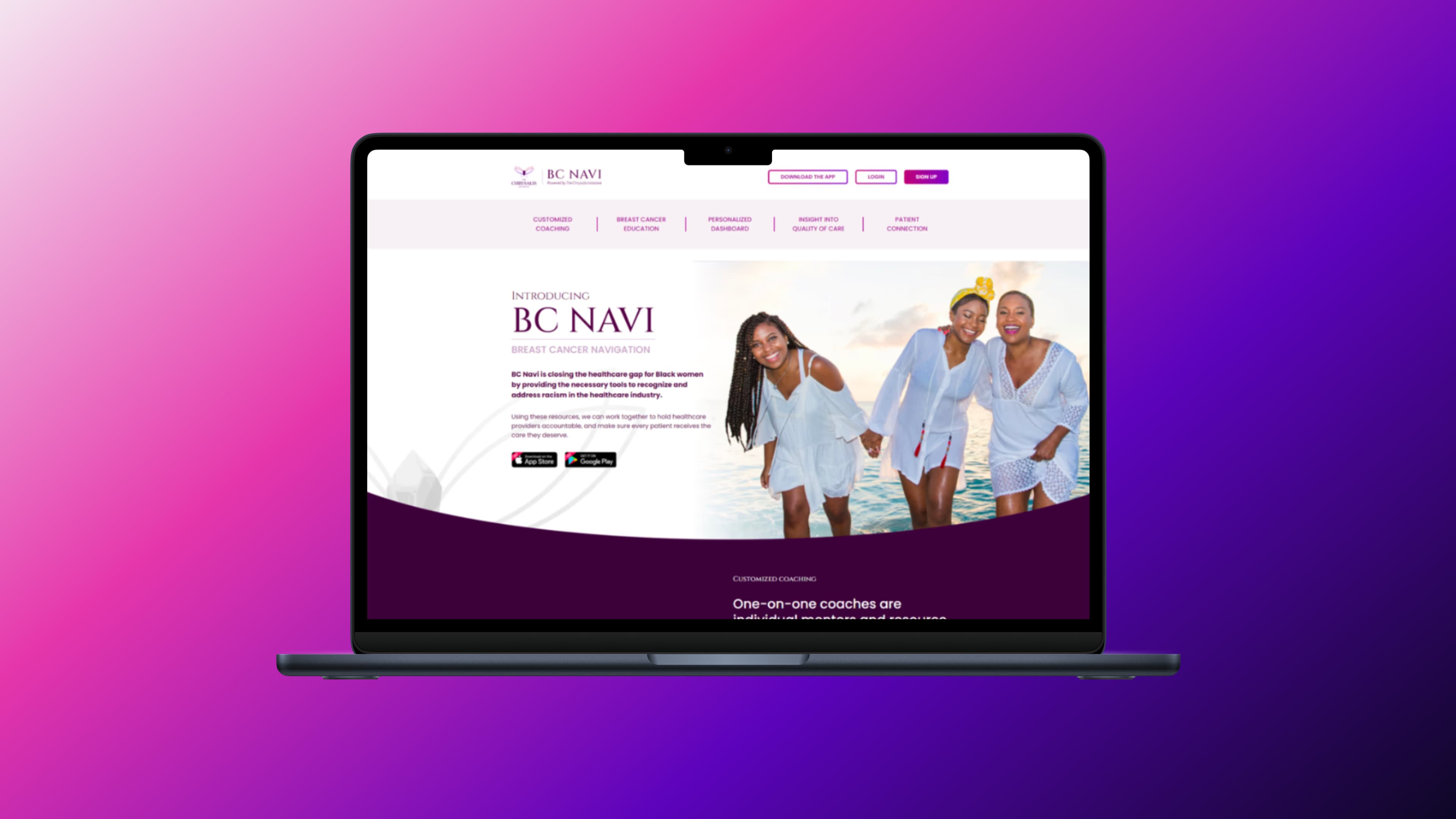
The product included coach and peer navigation, the heart of the platform, matching patients with trained coaches who had often been through breast cancer themselves, alongside a peer community of others on similar journeys. Education modules helped users recognize racism and bias in healthcare interactions, not abstractly, but in the specific patterns that show up in oncology care. Documentation tools designed to record symptoms, concerns, and provider responses before, during, and after appointments, simple enough to use under stress, detailed enough to create a record that mattered. Advocacy guides giving step-by-step language for addressing concerns and requesting appropriate care. Community support connecting users to others with similar experiences. A healthcare provider directory with ratings and reviews focused on culturally competent care.
The hard part wasn't deciding what to build. It was the language. Every screen had to be empowering without being patronizing. Every feature had to respect that the user might be in crisis. The design had to feel like a tool that trusts the user, not one that's trying to fix her.
(The platform in motion)
What replaced the email and Excel
A 44-second walkthrough of the live platform: the public marketing site, the personal coach pairing, the patient-facing dashboard, and the breast cancer education modules.
Selected outcomes
Recognized with a D&AD Pencil
Future Impact Initiative, 2022. Top 1% of design awards globally, peer-recognized signal that the work mattered.
50% rise in clinical trial enrollment among program users
Patients who used the platform were significantly more likely to participate in trials that could improve their care.
50% found the support to seek other opinions and better care
The platform gave users language, documentation, and confidence to advocate for themselves inside the healthcare system.
100% of users reported improved standard of care
And 30% reported increased confidence in their treatment. Outcomes that mean something in oncology specifically.
National reach for the initiative
The Chrysalis Initiative's program grew its hospital relationships and drew national media coverage. My work was the system beneath it: the coach experience, the patient dashboard, and the service that connected them.
Live operational improvement
The platform replaced Excel-document-and-email workflows with a real-time coach dashboard, enabling tracking, refinement, and continuous improvement based on actual usage data.
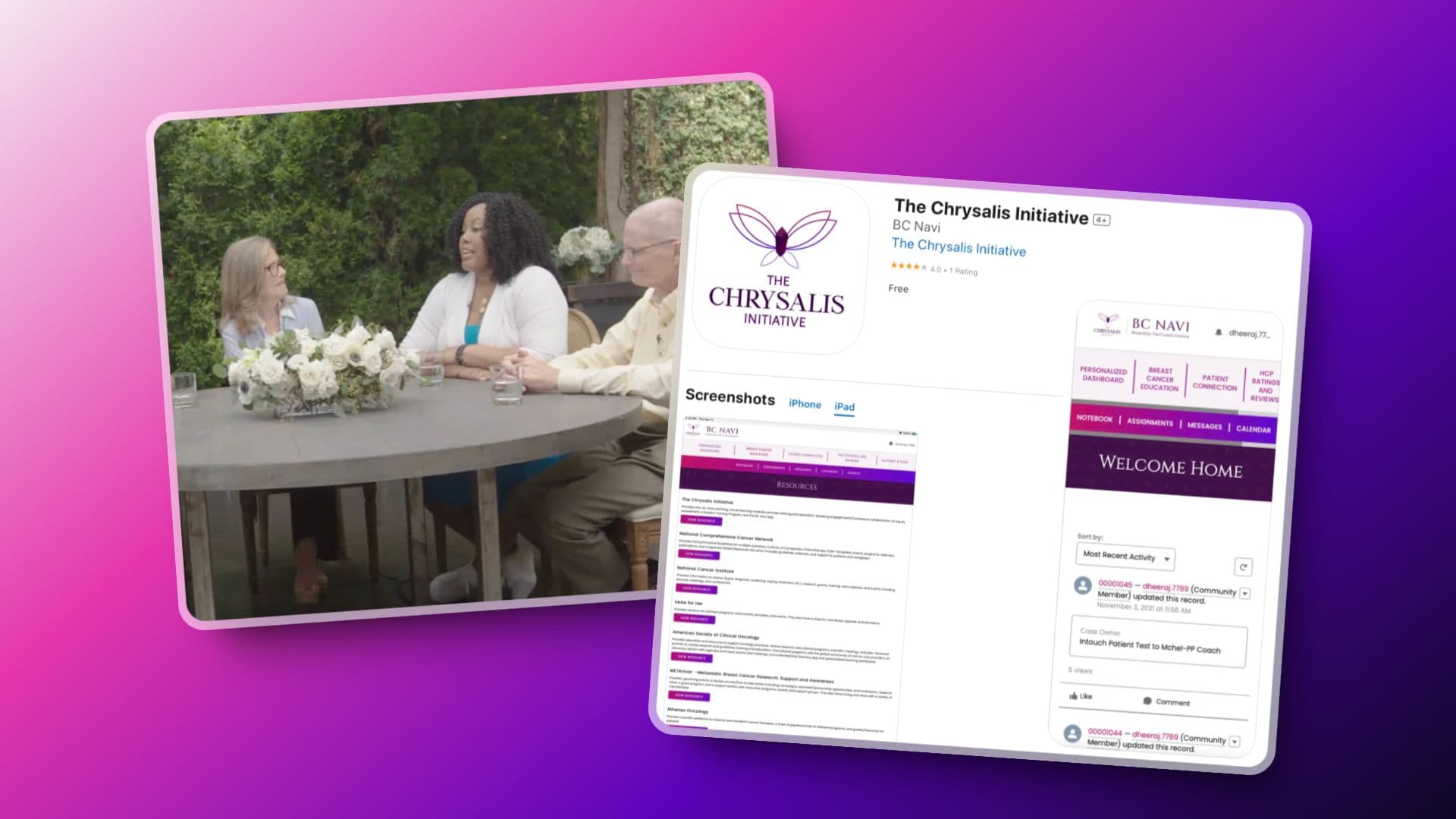
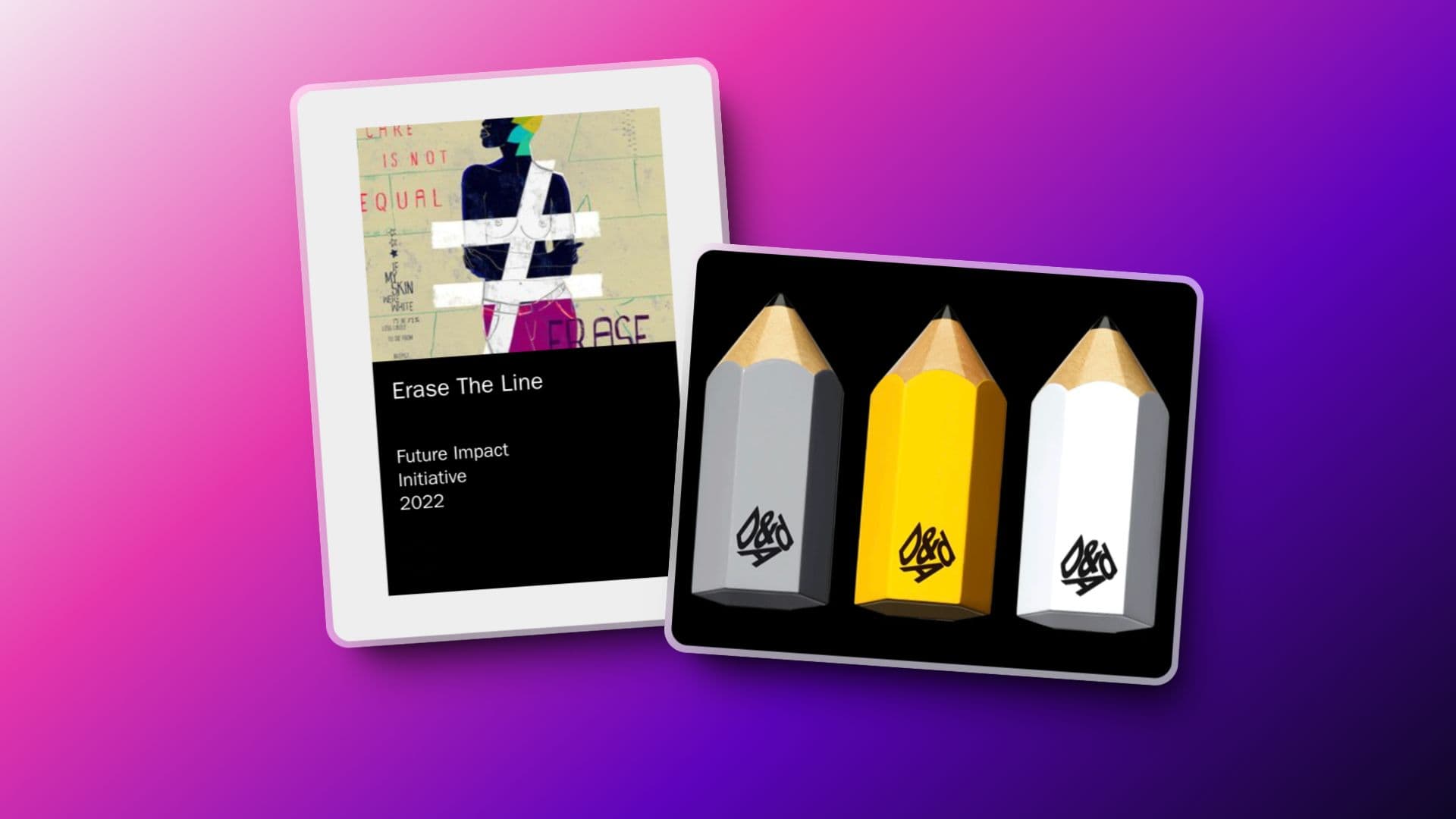
A D&AD Pencil is meaningful. It's a peer-recognized signal that the work is good. But the more important outcome is what happens when an app like this exists in someone's life at the moment they need it.
The recognition was the wrapper. The patients who got through the system to better care were the work.
Working on patient experience or healthcare equity?
Related work
Continue reading
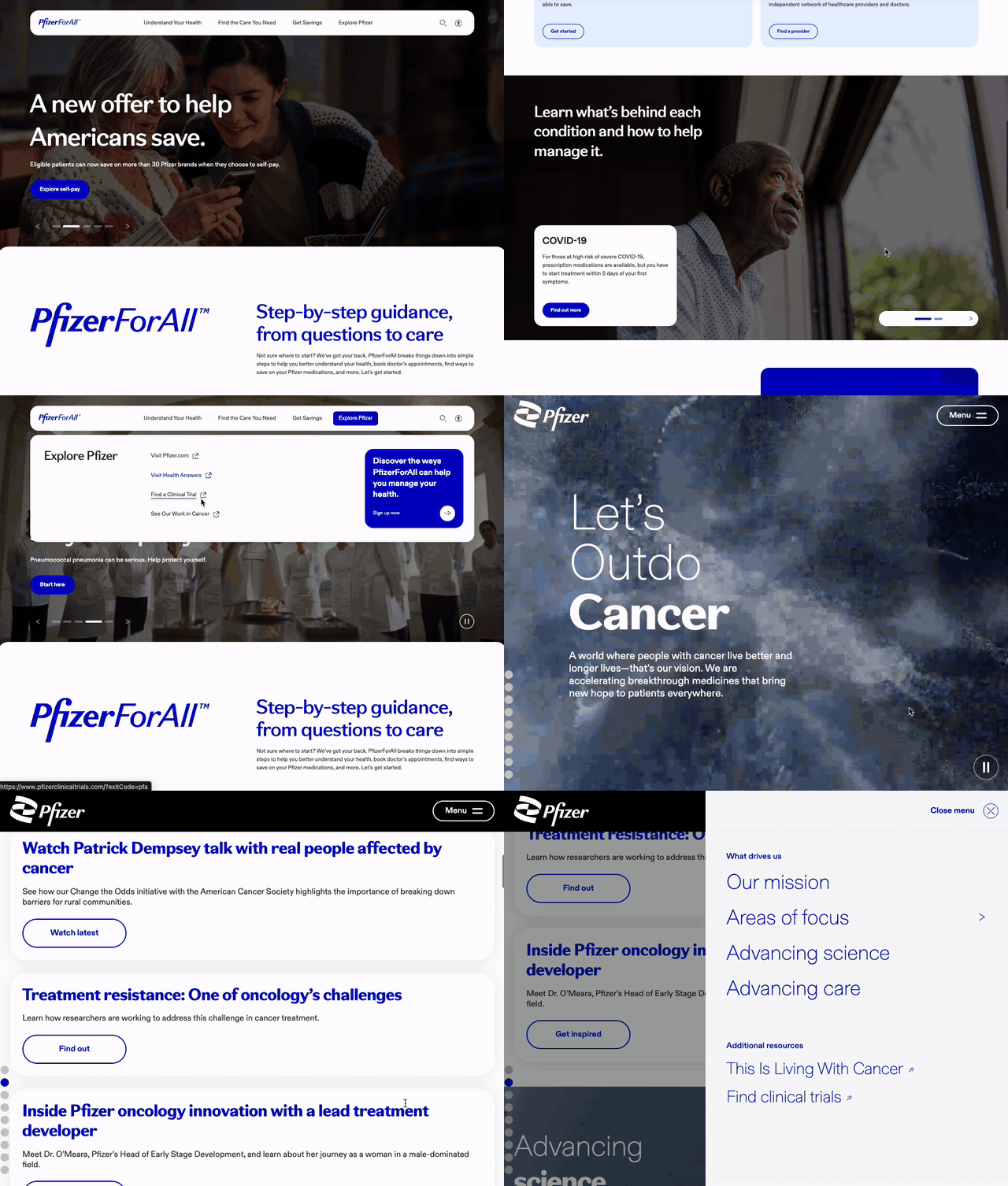
Multi-Brand · 3x Design Systems · Governance
Building digital governance across 70+ therapeutic brands
$3.5M+ in digital transformation. Industry-first mobile wallet integration for patient medication information.
Solo · AI Native Design Lab
Building an AI-native product design lab
A working AI-native product design practice, UXR tools, prototype agents, healthcare-first applications.