
About
I found I could add the most value before the creative work officially started.
I studied Communications Design and Advertising/Marketing at Pratt and started my career in identity, visual design, and creative direction.
The more meetings, planning sessions, and project kickoffs I was part of, the more I saw opportunities earlier in the process, before the brief was locked and before creative began. I became drawn to the research, framing, and definition work that helps teams understand the problem, find the opportunity, and set a clearer direction from the start.
That interest pulled me deeper into UX, CX, service design, experience architecture, product strategy, design systems, and design leadership. Today, much of my work sits where business goals, customer needs, technology, and the realities of getting something into market meet.

The work that's hard to staff full-time, but too important to miss.
Sometimes it's budget. Sometimes the opportunity isn't clear yet, or the organization doesn't know what kind of expertise it needs. Either way, important work can sit between roles, teams, or priorities, and opportunities get missed.
That might mean defining a product before development starts, untangling a customer journey, aligning a team around a roadmap, shaping a message, building a design system, or bringing an experienced point of view into a difficult decision.
I work comfortably with executives, strategists, creatives, product managers, researchers, stakeholders, and development teams.
Experience has taught me when to listen, when to respect the process already in place, and when a new possibility is worth putting on the table.
The goal isn't to add another opinion to the room. It's to create clarity early enough for the team to make a better decision and move the work forward.
Clarity should come before execution.
That principle shapes the judgment and guidance I bring to the day-to-day work: knowing when to listen, when to question, and when a team needs more clarity before moving forward.
Before the screen, campaign, platform, or product, there are harder questions.
What problem are we actually solving? For whom? What decision or action should the experience support? What does someone need to understand or trust before we ask them to do anything?
That matters everywhere, but especially in pharma, healthcare, financial services, and other regulated environments where complexity, compliance, and human needs have to coexist.
AI makes those questions more important, not less. Teams can move from idea to output faster than ever. Knowing what should be made, why it matters, and how we'll know it worked becomes even more valuable.
I've always been interested in what new tools make possible.
New technology and new ways of working have been a thread throughout my career.
AI has expanded that dramatically. I can make ideas tangible earlier, test assumptions, explore new processes, and see opportunities that can be difficult to understand in a deck or flow alone.
But I don't walk into an established team assuming the newest tool or process is the answer. I listen first, understand what's happening in the room, respect how the team works, and then introduce what might be useful in context.
New thinking works better when people can see it, react to it, and shape it together.
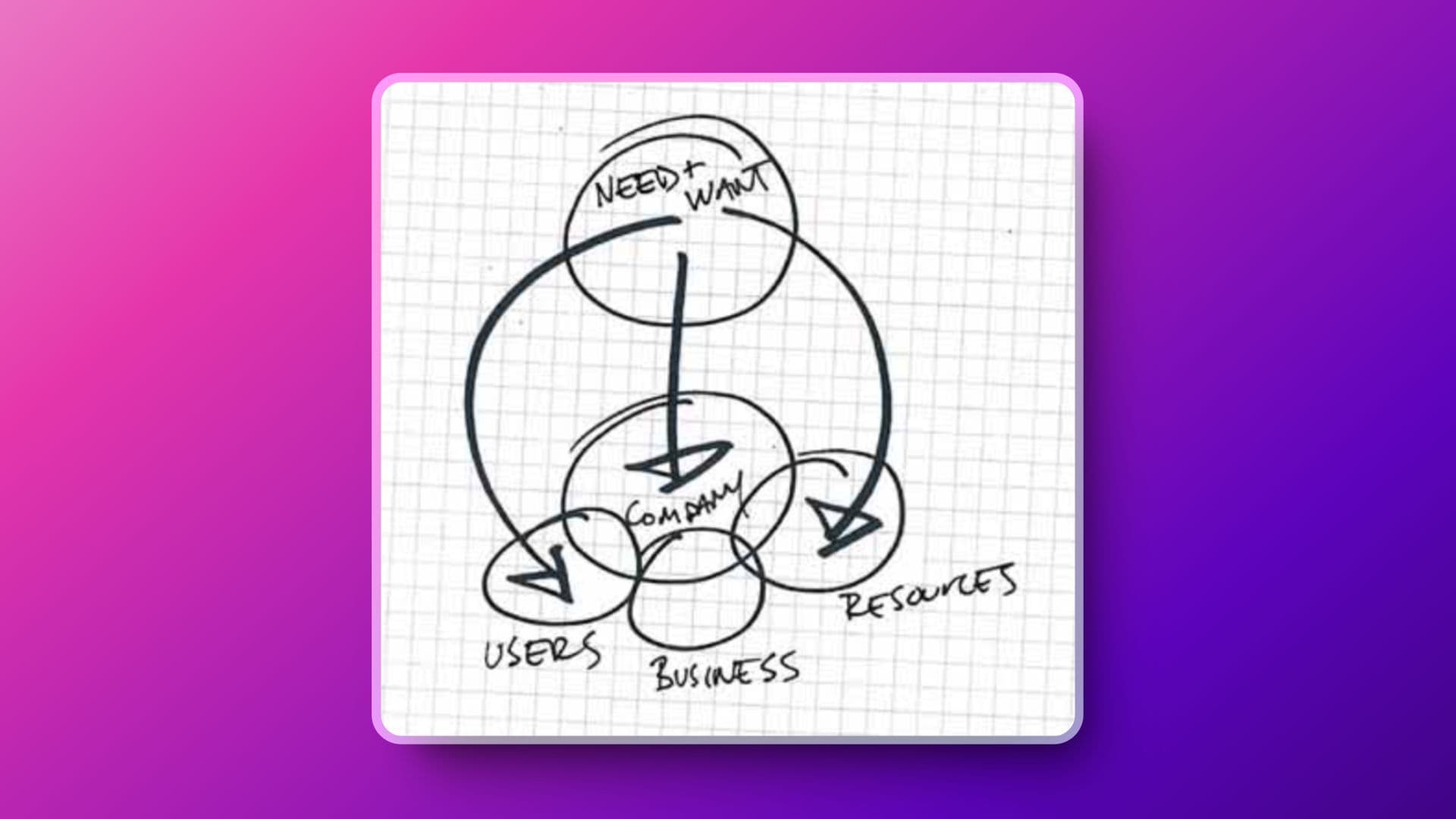
A lot of that thinking now feeds the Capizzi Process, Seeing Past the Cage, and the Clarity Cards: different ways of helping teams make problems visible, ask better questions, and move toward decisions.
Background
Today I lead senior consulting work at Publicis CoLab across the Pfizer portfolio, spanning multi-brand governance, regulated digital experiences, design systems, HCP and patient touchpoints, and emerging uses of AI.
Over the past 15+ years, my work has crossed pharma, healthcare, financial services, enterprise technology, customer experience, and patient experience.
I've also taught design fundamentals, Photoshop, and InDesign at NYU. My BFA is from Pratt Institute in Communications Design and Advertising/Marketing, and I recently completed Rutgers' AI Automation cohort.
A few things I'm proud of
D&AD Pencil · Future Impact Initiative
For the Cancer Equality App with The Chrysalis Initiative.
Industry-first pharmaceutical mobile wallet integration
Patient medication information delivered through an FDA-compliant, QR-based mobile wallet experience across a multi-brand portfolio.
Published thinking
I write about design, AI, healthcare, regulation, and how the work itself is changing.
In the work
Beyond the work
I'm also a photographer, painter, and documentary filmmaker. I've photographed Venice and New York, and I'm working on a film about the 2000 Subway Series and pre-9/11 New York.
I also co-founded a creative arts and music collective while at Rider University and still perform with my longtime friend Taylor Keer, creating live visuals alongside poetry and music.
That work asks something similar of design: see what's actually there before deciding what it should be, and know when to stop.
Born in Queens. Mets and Yankees fan, in that order. Competitive BBQ in the off-season.
A live performance, with visuals generated in real time alongside poetry and music. Posted July 2023.
Curiosity doesn't stop at work.
I share what I learn about design, AI, and building with colleagues, friends, and my daughters.
At home, questions often turn into small projects, from learning apps to experiments with Sora using things we've made together.
It keeps the technology practical, playful, and connected to real people.
The learning apps are free, with no sign-up: Fractions Quiz and Area and Perimeter Quiz.
About this site
Type and color
Designed and built by me in Next.js and Tailwind CSS, hosted on Vercel. Three open-source typefaces and six colors, listed here because a designer's site should show its own specs.
Instrument Sans
Rodrigo Fuenzalida with Jordan Egstad, Instrument. SIL Open Font License.
Geist
Andrés Briganti and Mateo Zaragoza, Basement Studio for Vercel. SIL Open Font License.
Geist Mono
Basement Studio for Vercel. SIL Open Font License.
#000F1F
PANTONE Black 6 C · ΔE 4.4
#061C2F
PANTONE 296 C · ΔE 2.0
#F5F5F4
PANTONE 663 C · ΔE 5.9
#A3A3A3
PANTONE 422 C · ΔE 1.5
#6B5CFF
PANTONE 2725 C · ΔE 7.1
#A798FF
PANTONE 2705 C · ΔE 6.6
Each swatch shows the screen color above and its nearest PANTONE® Solid Coated match below, found by CIEDE2000 against Pantone's published Lab values. A ΔE under 2 is hard to see; above that the difference is visible. The two purples sit furthest out because saturated screen violets are brighter than spot ink on coated paper can print. PANTONE® is a registered trademark of Pantone LLC.